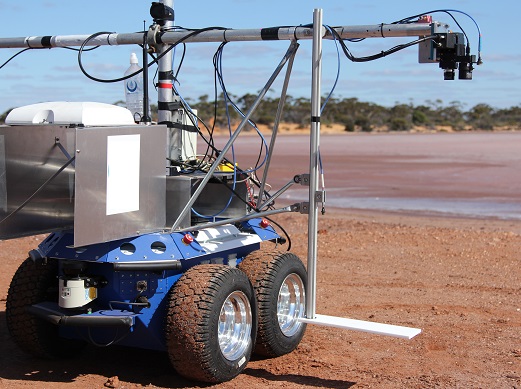
Robotics uses a surprising number of terms for machines that essentially do the same thing. You might hear Autonomous Mobile Robots (AMR), Unmanned Ground Vehicles (UGV), or simply ground robots. The names change depending on the industry, but the idea is straightforward: mobile platforms capable of moving through the real world and completing tasks without constant human control.
These robots now operate far beyond controlled factory environments. They navigate warehouses, agricultural fields, construction sites, and uneven outdoor terrain — places where repetitive work, safety risks, or long operating hours make automation especially valuable.
What actually makes autonomy work is not the robot itself, but its ability to understand where it is. Reliable navigation depends on a combination of sensors, and increasingly, high-precision GNSS positioning plays a central role. RTK (Real-Time Kinematic) technology allows ground robots to know their position with centimeter-level accuracy, enabling consistent path following, repeatable missions, and predictable behavior in dynamic environments.
Not long ago, this level of precision belonged mostly to research labs and specialized surveying equipment. Today, it has quietly moved into commercial robotics. Advances in electronics, connectivity, and sensor integration have reduced both cost and complexity, allowing developers and system integrators to deploy precise navigation in applications such as agriculture, last-mile logistics, inspection, and site security.
In practice, autonomy is less about replacing people and more about removing the tasks humans should not have to repeat endlessly. Accurate positioning simply makes that transition reliable enough to trust outside the lab — where robots have to deal with real terrain, real obstacles, and real operational constraints.
🔗️ArduSimple:: How to build autonomous vehicles from commercial ground robots with multi-sensor setups to precision lawn mowers.
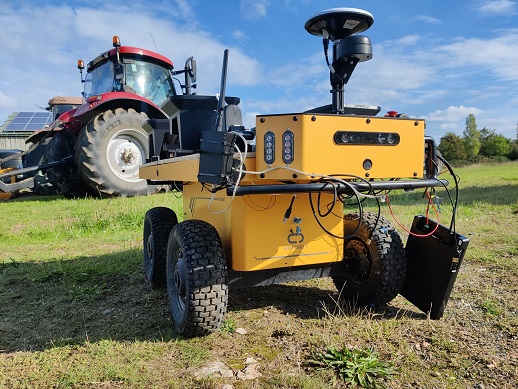
Agricultural robots are gradually changing how crops and land are managed. Instead of relying entirely on heavy machinery or manual labor, farmers are beginning to automate repetitive field operations with systems capable of working consistently, hour after hour, with remarkable accuracy.
These autonomous platforms combine specialized sensors, RTK GNSS receivers, and carefully positioned antennas to maintain reliable positioning even in challenging outdoor conditions. The goal is not simply automation — it is controlled precision.
With accurate navigation, robots can move through narrow crop rows, apply treatments exactly where needed, and monitor plant conditions while minimizing disturbance to the surrounding soil and vegetation.
🔗️ArduSimple: Portable 3D tracking system to test agricultural robots in the field
Why RTK Matters in Modern Agriculture
The real breakthrough behind agricultural robotics is RTK (Real-Time Kinematic) positioning.
Standard GPS positioning often introduces errors of several meters — acceptable for navigation, but insufficient for farming operations where centimeters make the difference between treating a plant and damaging it. RTK technology reduces that uncertainty to centimeter-level accuracy, enabling robots to operate reliably in real agricultural environments.
This precision unlocks several practical advantages:
Rather than replacing farmers, these systems shift human effort toward planning, supervision, and decision-making — while machines handle the repetitive, high-precision work across large areas.
For teams exploring how RTK positioning is being adopted worldwide, reviewing real deployment examples and practical use cases is often the best way to understand where agricultural robotics delivers the greatest value today.
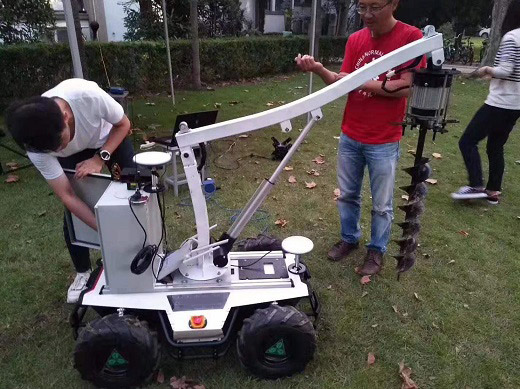
Automated planting systems place seeds and trees with consistent spacing and straight alignment, removing the small steering errors common in manual operations. The result is a cleaner field layout and more predictable crop development from the very beginning.
Precise row geometry helps optimize land use, reduces competition between plants, and prevents seed overlap. Inputs such as fertilizer can then be applied exactly where needed, minimizing waste and improving overall efficiency.
Rather than changing farming overnight, precision planting simply creates a better starting point for the entire growing season — one where accuracy early on leads to smoother operations later.
🔗️ ArduSimple: Precision design and monitoring of food forest with GNSS
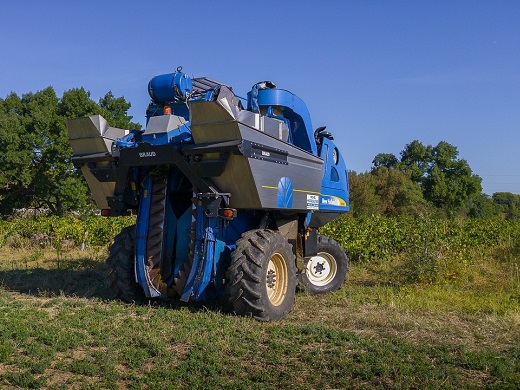
Harvesting robots are built to pick crops—fruits, vegetables, grains, you name it—with remarkable precision and speed that traditional methods simply can’t match. Using advanced sensors and gentle mechanical arms, they spot ripe produce and handle it with care, delivering higher quality yields while dramatically cutting the need for manual labor.
These autonomous systems help solve one of agriculture’s biggest challenges: labor shortages. They can run 24/7 during the critical harvest season, performing the same repetitive tasks with consistent accuracy. The result? Less damaged crops, faster movement from field to market, and a much more efficient, cost-effective process overall.
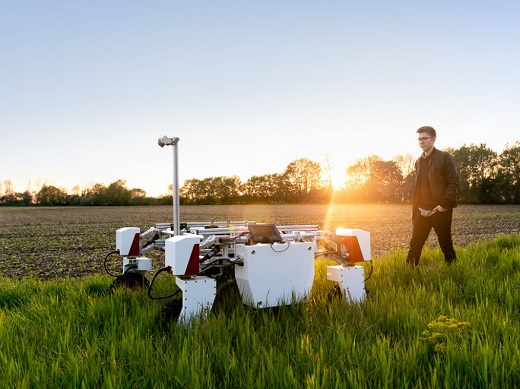
Field monitoring robots use high-resolution cameras and advanced sensors to keep a constant, detailed watch over crop health. These autonomous field robots navigate smoothly through the fields on their own, delivering far more frequent and precise oversight than traditional manual inspections ever could. Farmers can now catch potential issues early — long before they spread and cause serious damage.
At the heart of these systems is early detection of threats like pest infestations, diseases, or nutrient deficiencies. By collecting real-time data right at the plant level and combining it with precision GNSS positioning, the robots enable highly targeted treatments. Instead of blanket applications, farmers can apply pesticides or fertilizers only where they’re truly needed.
The benefits are clear: less wasted time and chemicals, significantly lower costs, healthier crops, and a more sustainable approach to farm management overall.
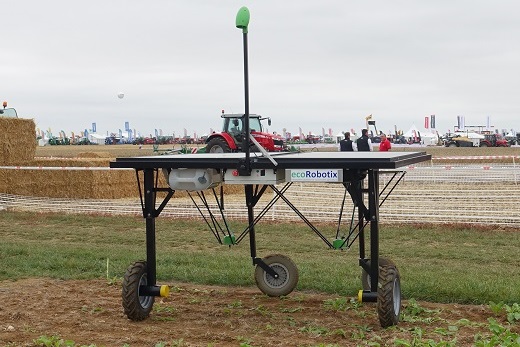
Autonomous sprayers are designed to apply fertilizers, pesticides, and herbicides with impressive precision and consistency. Instead of relying on human drivers, these robotic systems eliminate the usual variability, making sure every plant receives exactly the right amount of treatment — no overlaps and no missed spots.
Thanks to precision GNSS technology and smart sensors, the sprayers can adjust in real time and apply chemicals only where they’re truly needed. This smart approach brings several clear advantages: it dramatically reduces waste and input costs, minimizes human error, and allows the machines to keep working efficiently day and night, even during the busiest spraying windows.
In the end, farmers get healthier crops and higher productivity, while also running a cleaner, more sustainable operation with less chemical runoff into the environment.
🔗Septentrio: GNSS receivers for autonomous navigation
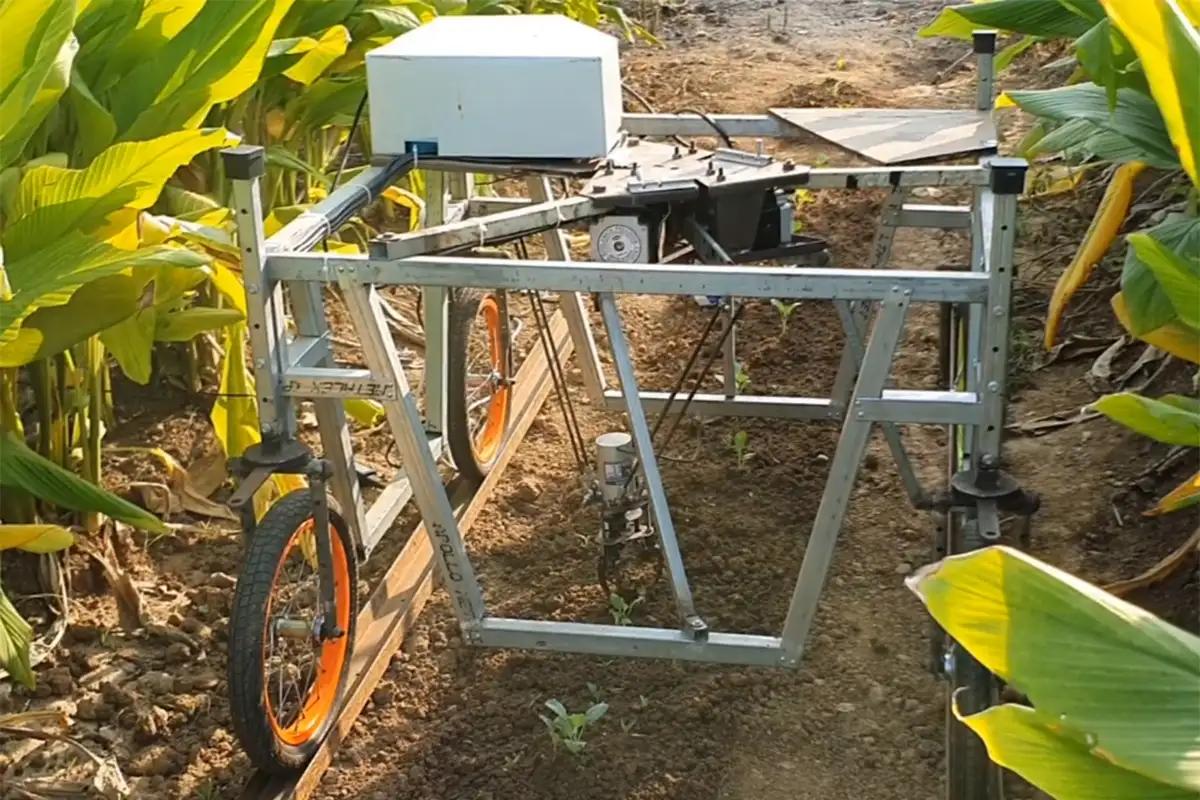
Weeding robots are autonomous machines that identify and remove weeds without using any herbicides. Using advanced computer vision and artificial intelligence, they can tell the difference between crops and unwanted plants with impressive accuracy, targeting only the weeds while leaving the crops untouched.
The biggest advantage is the dramatic reduction in harmful chemicals. Instead of spraying the whole field, these robots help protect soil health, support biodiversity, and respond to the growing demand for more sustainable and organic produce. On top of that, they work efficiently and offer a cost-effective alternative to manual weeding, which also lowers the overall environmental impact of the farm.
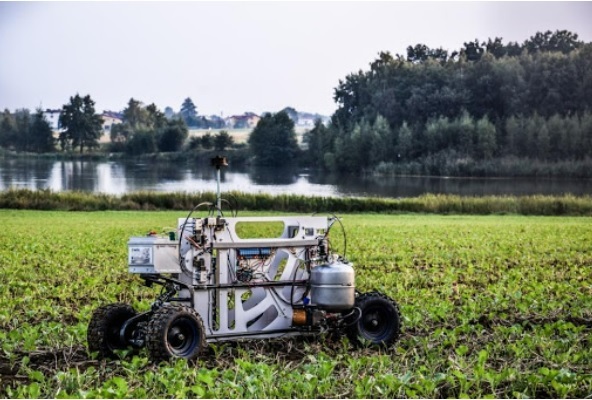
Autonomous fertilizing platforms apply fertilizers and essential nutrients with impressive precision. These systems deliver the right amount of nutrition exactly where the crops need it, creating a healthier growing environment and gradually improving overall soil quality.
The biggest benefit is that they remove the guesswork and uneven application so common with traditional methods. Thanks to advanced sensors and precision GNSS navigation, the platforms tailor nutrient delivery based on real field data. This targeted approach prevents over-fertilization, reduces chemical runoff, boosts plant growth and yields, and supports a more sustainable and cost-effective agricultural cycle.
Whether it’s developing autonomous snow plows, street sweepers, or garbage collection robots, RTK technology is the key element that enables reliable outdoor operation. This technology allows the robots to create an ultra-precise map of their environment and navigate it with centimeter-level accuracy. Thanks to this precision, the machines can move in perfectly straight lines, maximize coverage, avoid obstacles effectively, and optimize their working time.
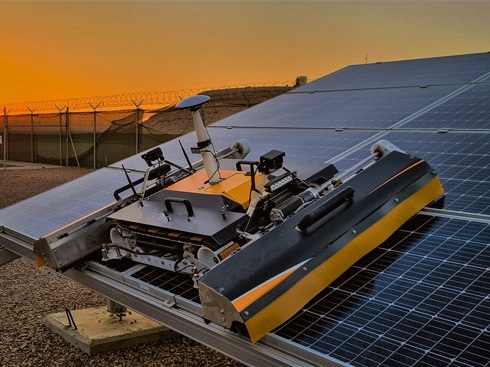
One of the most impressive applications is the automation of solar panel cleaning. Using RTK, robots can traverse the surface of the panels with absolute precision, removing dirt and debris without any risk of falls or structural damage. This ensures that every photovoltaic cell operates at full capacity, dramatically reducing manual maintenance costs and improving overall energy efficiency.
Construction ground robots equipped with RTK technology are transforming the industry by delivering unmatched accuracy during surveying and site preparation. These autonomous systems generate highly detailed maps that clearly show the site’s topography, including contours and key features. By precisely measuring distances, angles, and elevations, they provide the essential data needed to prepare the soil — such as grading and leveling — with surgical exactness.
Beyond mapping, these unmanned ground systems (UGS) are the ideal solution for infrastructure and road construction. They can perform repetitive and labor-intensive tasks, such as applying construction markings, at high speeds without sacrificing accuracy. By automating these time-consuming processes, RTK-enabled robots reduce the risk of human error, lower operational costs, and help ensure that complex projects stay on schedule and within technical specifications.
🔗Construction Robotics Report 2026: The Rise of Repeatable Production
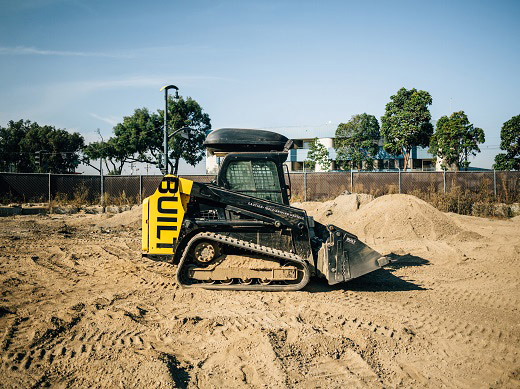
Construction ground robots equipped with RTK technology are transforming the industry by delivering unmatched accuracy during surveying and site preparation. These autonomous systems generate highly detailed maps that clearly show the site’s topography, including contours and key features. By precisely measuring distances, angles, and elevations, they provide the essential data needed to prepare the soil — such as grading and leveling — with surgical exactness.
Beyond mapping, these unmanned ground systems (UGS) are the ideal solution for infrastructure and road construction. They can perform repetitive and labor-intensive tasks, such as applying construction markings, at high speeds without sacrificing accuracy. By automating these time-consuming processes, RTK-enabled robots reduce the risk of human error, lower operational costs, and help ensure that complex projects stay on schedule and within technical specifications.
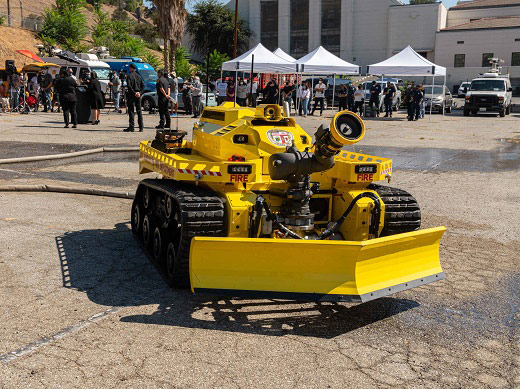
Robotic firefighting vehicles are built to operate in dangerous environments where human entry is too risky. These platforms deliver high-volume water flow and are controlled remotely with high-definition video feedback, giving operators excellent maneuverability in unstable and hazardous conditions.
The integration of RTK technology is a game-changer, providing precise positioning that allows operators to navigate smoke-filled structures or unstable industrial sites with full confidence.
In today’s complex urban environments, these robots and drones have become essential. They help firefighters bypass traffic and debris, monitor high-rise hazards from the air and ground, and safely manage dangerous chemicals while keeping personnel at a distance.
Combining high-definition feedback with RTK precision, these systems enable faster, safer, and more effective emergency responses.
Inspection robots identify cracks, corrosion, and leaks in buildings and infrastructure, providing detailed structural analysis. They are vital for collecting data in environments that are uninhabitable or dangerous for humans, such as chemically contaminated or radiated zones.
In the renewable energy sector, these robots offer a safe way to inspect wind turbines. They provide high-definition views of blades and bearings, identifying damage or wear that requires attention without the need for manual climbing. This automation ensures structural integrity while significantly enhancing worker safety and operational efficiency.
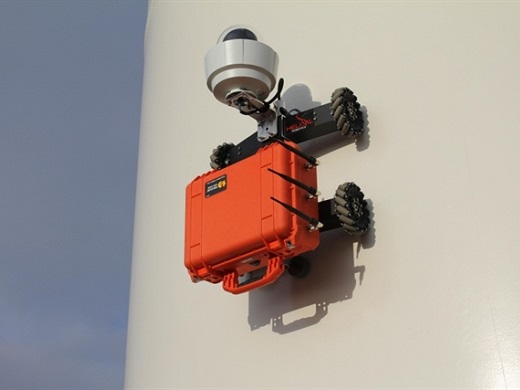
Lawn mowers equipped with RTK technology are transforming landscaping by navigating and mowing with centimeter-level accuracy. Unlike traditional mowers, these robots can maintain perfectly straight lines and ensure complete coverage without overlapping, significantly increasing efficiency. These gardening robots are versatile enough to manage expansive areas like golf courses and public parks, as well as private residential backyards.
For those who prefer a more hands-on approach, the rise of open-source components has made DIY lawn mowers a popular project. Building a mower from scratch using various materials and modular parts allows enthusiasts to customize their robots while enjoying a rewarding engineering challenge. Whether professionally manufactured or a DIY creation, RTK-guided mowers ensure a pristine lawn with minimal manual effort.
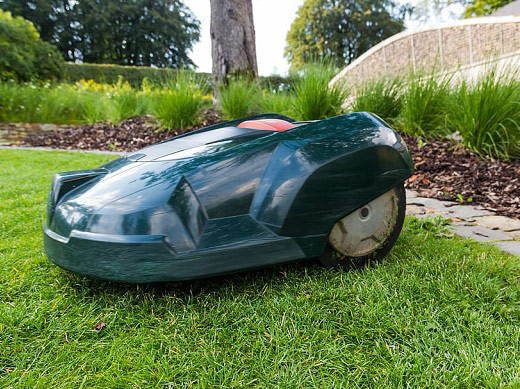
Autonomous marking robots are purpose-built to paint field lines with absolute accuracy across stadiums, public parks, and sports clubs. By utilizing a specialized nozzle system to apply paint directly to the turf, these robots eliminate the inconsistencies of manual marking, ensuring every line meets professional regulatory standards.
These systems streamline the maintenance of athletic facilities by:
Ensuring Perfect Geometry: Using precision navigation to create straight lines and perfect arcs every time.
Increasing Efficiency: Reducing the labor hours required to prep fields for game day.
Versatile Application: Easily switching between different sport layouts, from soccer and football to track and field.
By automating this repetitive task, sports organizations can maintain high-quality playing surfaces with minimal effort and maximum consistency.
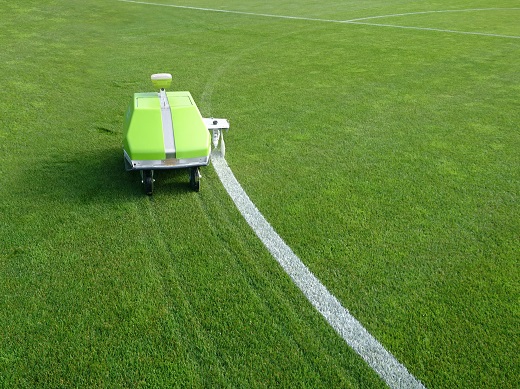
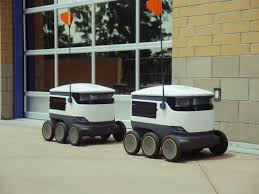
Security robots patrol and monitor large areas, providing real-time alerts for suspicious activity and managing access control. They are essential for inspecting hazardous or hard-to-reach zones, keeping human personnel out of harm’s way.
By utilizing RTK technology, these robots map terrain with centimeter-level precision. This allows them to:
Optimize routes for rapid response.
Navigate complex environments without error.
Maintain consistent patrol cycles to eliminate blind spots.
Combining autonomous mobility with precise positioning ensures a faster, more reliable solution for modern site protection.
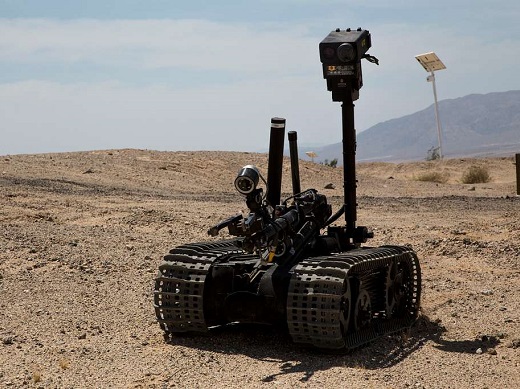
Surveying robots streamline site layouts by autonomously recording coordinate data. By replacing manual measurement, these systems eliminate human errors in data entry and ensure seamless communication between the field and the site office.
The impact of autonomous surveying includes:
Enhanced Accuracy: Greater precision than conventional methods.
Increased Speed: Rapid layout execution to reduce project timelines.
Labor Efficiency: Significant time savings by automating repetitive recording tasks.
These systems empower professionals to deliver error-free results with maximum efficiency.